Cork Christmas Trees report, November 2026. We tested the slice off the bottom of the Christmas tree on our own trees at our farm in Ovens, at the west end of Ballincollig, and checked what the research says.
Summary
- The shop cut is in the wrong place. In our test, trees cut just one hour before going into water drank less and did not last as long as trees cut right before they went into the stand. This held for Nordmann, Noble and Fraser fir.
- The cut starts closing fast. Research on cut stems found air blocks the water tubes in the first 1 to 2 hours after cutting (Postharvest Biology and Technology, 2006), and fir trees seal a cut with resin (Plant Physiology).
- A fresh cut at home brings the tree back. A recut tree in water can end up 5 to 10% wetter than the day it was felled (USDA Agriculture Handbook 66).
- Paring the trunk to fit a stand is a big mistake. Trees with the trunk end shaved down to fit a stand did no better than trees with no water at all (Washington State University).
- Heat is the biggest factor. A cut tree can look perfect outdoors for up to three months. Beside a radiator or fire it can start dropping needles within a week.
- What to do: cut around an inch off the base at home right before the tree goes up, leave the bark alone, use a stand that fits, keep it away from heat and top up the water every day.
Key figures
| Finding | Figure | Source |
|---|---|---|
| Gap between cut and water that made a difference in our test | 1 hour | Cork Christmas Trees farm test, 2026 |
| When cut stems block with air | First 1 to 2 hours | van Meeteren et al., 2006 |
| When experts say a tree should be recut | After 6 to 8 hours | Purdue University Extension |
| Extra moisture a recut tree can gain in water | 5 to 10% above harvest | USDA Handbook 66 |
| Water a tree drinks per day | About 1 litre per inch of trunk width | USDA Handbook 66 |
| Trees with shaved trunk ends in a water stand | No better than no water | Washington State University |
| Time a cut tree looks fresh outdoors in the cold | Up to 3 months | Cork Christmas Trees |
Full report
1. Our farm test
We took 12 trees from our farm: four Nordmann fir, four Noble fir and four Fraser fir. Half had their base cut and were then left out of water for one hour, which is less time than it takes most people to get a tree home, move the furniture and find the stand. The other half were cut right before they went into water. Every tree was kept at the same temperature and in the same light, and we checked the water each tree used every day.
The trees cut right before going into water took up more water every day and lasted longer. This was the same for all three types of tree.
2. Why the cut closes up
Think of it like cutting flowers. You cut the stems right before they go in the vase, not in the shop an hour earlier. A tree works the same way.
When a stem is cut, air is pulled into the open water tubes. In a study on cut flowers, that air caused all of the blockage seen in the first 1 to 2 hours after cutting. When the stems were kept dry for longer, the plant added its own seal, and this got worse the longer they stayed dry (van Meeteren, Arévalo-Galarza and van Doorn, Postharvest Biology and Technology, 2006).
Fir trees go a step further. When the wood is cut, the tree sends resin to the wound, and it hardens into a seal as it dries (Plant Physiology).
3. How long the shop cut lasts
US extension services say a tree should be recut if it has been out of water for more than 6 to 8 hours, because the cut cells get blocked (Purdue University Extension). Penn State puts the limit at 12 hours (Penn State Extension). Those figures are about whether a tree can still drink at all. Our test shows a difference after just one hour, so the best time to cut is right before the tree goes up.
If a tree has been sitting dry for days, NC State says it definitely needs another cut (NC State Extension).
4. A fresh cut at home brings the tree back
When a fresh tree is recut and put in water, it usually takes up so much that it ends up 5 to 10% wetter than the day it was harvested (USDA Agriculture Handbook 66, Christmas Trees chapter). The cut that counts is the one made right before the tree goes in the stand.
5. Leave the bark alone
The bark is the tree’s protective shell, and the wood just under it is what does most of the drinking. One of the most common requests we get is to pare down the sides of the trunk so the tree fits a small stand. We see it all the time, and it is one of the biggest mistakes you can make.
Penn State advises against whittling down the sides of the trunk to fit a stand (Penn State Extension). Washington State University tested stands where the end of the trunk is shaved down to fit, using Noble, Fraser and Nordmann fir, the same three trees we used in our test. Trees standing directly in water stayed fresh for the whole trial. Trees in the shaved-trunk stands did no better than trees with no water and were badly dried out within 7 to 10 days (WSU Christmas tree research, page 7).
If the trunk does not fit, get a bigger stand. A pin stand, where the base is drilled up the middle, leaves the outer wood alone, but the drilled hole does not help the tree drink more (care guidance by Dr Gary Chastagner and Dr Eric Hinesley, National Christmas Tree Association). The cut end must still sit in water.
6. Heat is the biggest factor
A cut tree kept outdoors in the cold will look perfect for up to three months. Bring it inside beside a radiator, stove or open fire and it can start dropping needles within a week. From what we see every year, heat is the number one thing that dries a tree out.
- Keep the tree as far from radiators, stoves, fires and heaters as you can.
- Turn down the radiator nearest the tree if you can.
- A cooler room means a fresher tree and less water used every day.
7. Water and stands
A tree drinks about 1 litre of water a day for every inch of trunk width, and it is thirstiest in the first week (USDA Agriculture Handbook 66). The most common mistake the USDA lists is a stand that is too small, so the tree dries out between waterings. Once the water drops below the base, the cut can seal again.
We stock a range of water stands at both our locations to fit every size of tree, so there is no need to pare the trunk. We also give out free tree food with every tree. We find it helps, but it is no replacement for a fresh cut, a good stand and keeping the tree away from heat.
8. The tree you pick
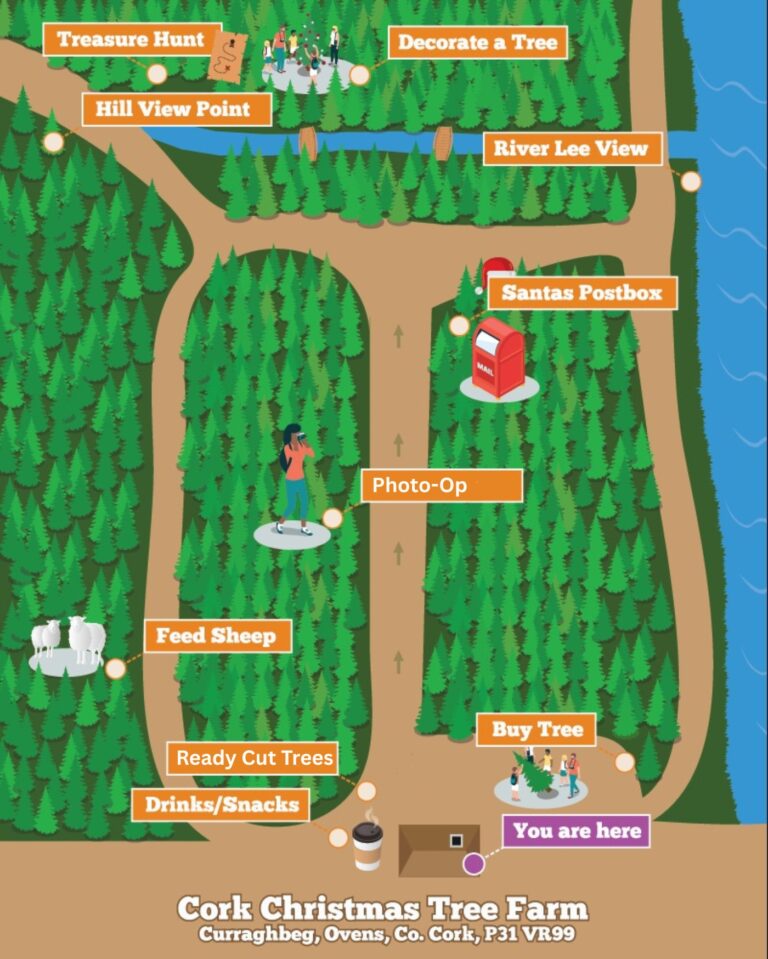
The fresher the tree, the longer it lasts. At our farm in Ovens you can pick your tree in the field and cut it yourself, so it goes from growing to your car in minutes.
The type of tree matters too. In the USDA ratings, Nordmann fir, the most popular tree in Ireland, is rated excellent when kept in water but only poor to good when kept dry, so it gains the most from a fresh cut and a full stand (USDA Agriculture Handbook 66, Table 1). Noble fir is one of the best at holding its needles, and we sell it at both our farm in Ovens and our shop on Centre Park Road.
9. What we recommend
- Have the stand ready and filled before the tree comes in.
- Cut around an inch off the base, straight across, right before it goes up.
- Never pare or shave the sides of the trunk.
- Keep the tree away from radiators, stoves and fires.
- Check the water every morning. If it runs dry, take the tree out, cut it again and put it back.
- Not putting it up straight away? Cut the base and keep the tree in a bucket of water outside or in the shed, then cut again before it goes up.
For more tips, see our Christmas tree care guide.
Visit us
Cork Christmas Trees opens on Sunday 22 November at our farm in Ovens, at the west end of Ballincollig, and our shop on Centre Park Road, Cork. Cut your own or choose from our Noble and Nordmann fir, and pick up a water stand and free tree food while you are there. Call us on 087 7691389.